
The groups worry the Corps’ pending approval of a project in Prince George County could upend the system that protects wetlands in Hampton Roads.
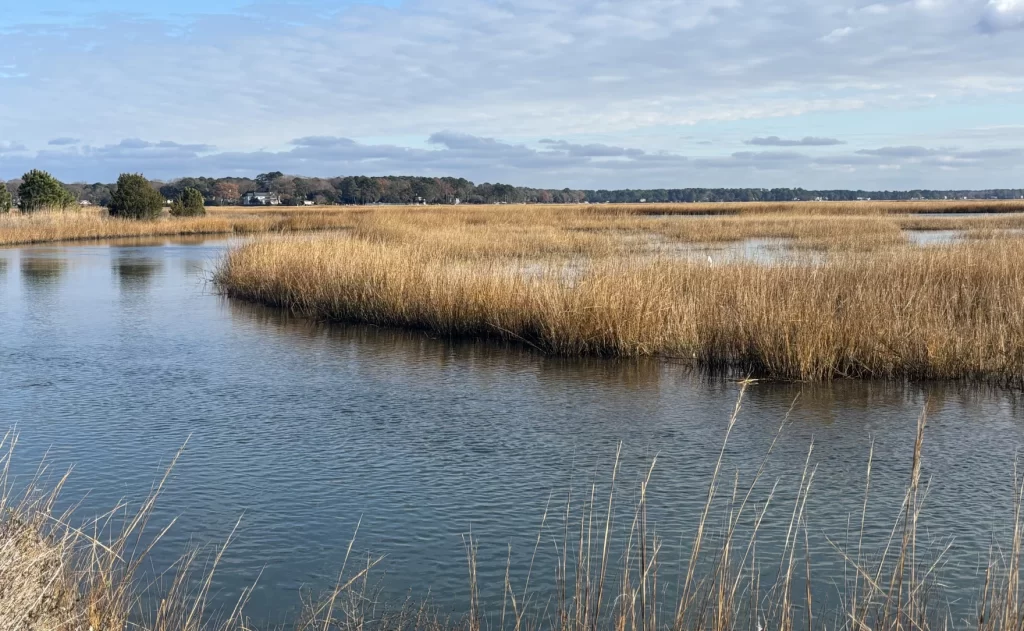
Wetlands at Pleasure House Point in Virginia Beach. Katherine Hafner / WHRO News
For decades in Hampton Roads, officials have used a legal mechanism called mitigation banking to protect local ecosystems.
If a developer or locality impacts wetlands or river bottom when building a project, they must compensate by paying to restore it elsewhere. Organizations that conduct restoration work can sell credits to developers to meet those requirements – hence the bank-like system.
The goal is for the compensatory work to serve the same river or watershed that is affected by the original development action.
But local environmental groups and some federal scientists now worry that an impending decision by the U.S. Army Corps of Engineers could upend that system.
The Corps has issued a notice of intent to approve a wetlands mitigation project in Prince George County, along the James River east of Petersburg.
The project would earn wetlands credits that could be sold in the Hampton Roads region, which the Corps says would comply with state and federal requirements and follows a lengthy review process.
But environmentalists say allowing restoration to occur so far from local development would violate the spirit of the system and could ultimately “export” wetlands work out of Hampton Roads.
Nearly a dozen groups, including Wetlands Watch, Lynnhaven River Now, the Chesapeake Bay Foundation and the Elizabeth River Project, signed a recent letter to the Corps voicing their concerns.
“A lot of the things that make living along the water such a beautiful thing could be reduced and just move the area back toward industrial (uses) without having any offsets to fix the damages that are being done,” said Helen Kuhns, executive director of the Coastal Virginia Conservancy, which does restoration work and operates a land trust. “We just want what’s right for the waterways.”